
Ultimate Guide to Facial Balancing
Modern aesthetic medicine has shifted toward a more sophisticated philosophy: facial balancing. Instead of treating isolated lines…

Modern aesthetic medicine has shifted toward a more sophisticated philosophy: facial balancing. Instead of treating isolated lines…

For years the standard approach to aesthetic injectables was to identify a crease, place filler beneath it, and make it disappear. Not anymore…

When early jowling or lower-face heaviness appears in the mirror, it is natural to assume the problem starts directly at the jawline, but that isn’t the case…

Profile balancing is not about forcing the face into a universal formula. It is about understanding structure, proportion, and light to identify the smallest change that creates the greatest harmony.

At the forefront of this philosophy are two advanced techniques: micro-dosing and micro-balancing. But what do these terms actually mean, and how do they relate to achieving ultimate facial harmony?

Building the scaffold moves beyond simple volume replacement. By layering structural Hyaluronic Acid (HA) fillers with collagen-stimulating biostimulators like Sculptra, we create a supportive foundation that doesn’t just mimic youth—it helps your skin produce it.

Advanced non-surgical techniques—specifically multi-syringe facial balancing via a liquid facelift—offers a compelling alternative to a surgical facelift…

The goal of today’s cosmetic treatment is to identify when uneven muscle activity disrupts facial balance and soften that imbalance without stripping away the expressions…

We look at the face as an interconnected architectural structure, those facial shadows are rarely isolated issues…

In the journey of facial balancing, we often discuss structural foundations—cheek volume, jawline definition, and chin projection. However, the most sophisticated results at Simple Radiance Medspa often come down to the final 10%: the refined details.
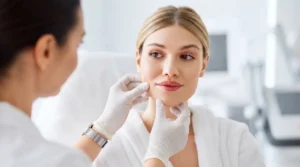
When exploring dermal filler longevity, the reality is that while facial balancing provides immediate, transformative results, dermal fillers are temporary. Understanding how your body interacts with these products is the key to maintaining a consistently refreshed and harmonious look.

If you’ve never had a full-face aesthetic consultation, or if you’ve only ever pointed to a specific line you want “filled,” stepping into the clinic can feel intimidating. Under the expert guidance of Owner and Master Injector Betty Cravens, we want to demystify this process. Here is exactly what you can expect when you sit down with us in our Austin clinic.